Articles & Insights
Explore tutorials, manifestos, and technical deep-dives into Handshake and the decentralized web.

First to Arrive. Last to Be Recognised.
Handshake names existed long before ICANN's latest applications. Should established use count when the same internet extensions are proposed in another naming system?
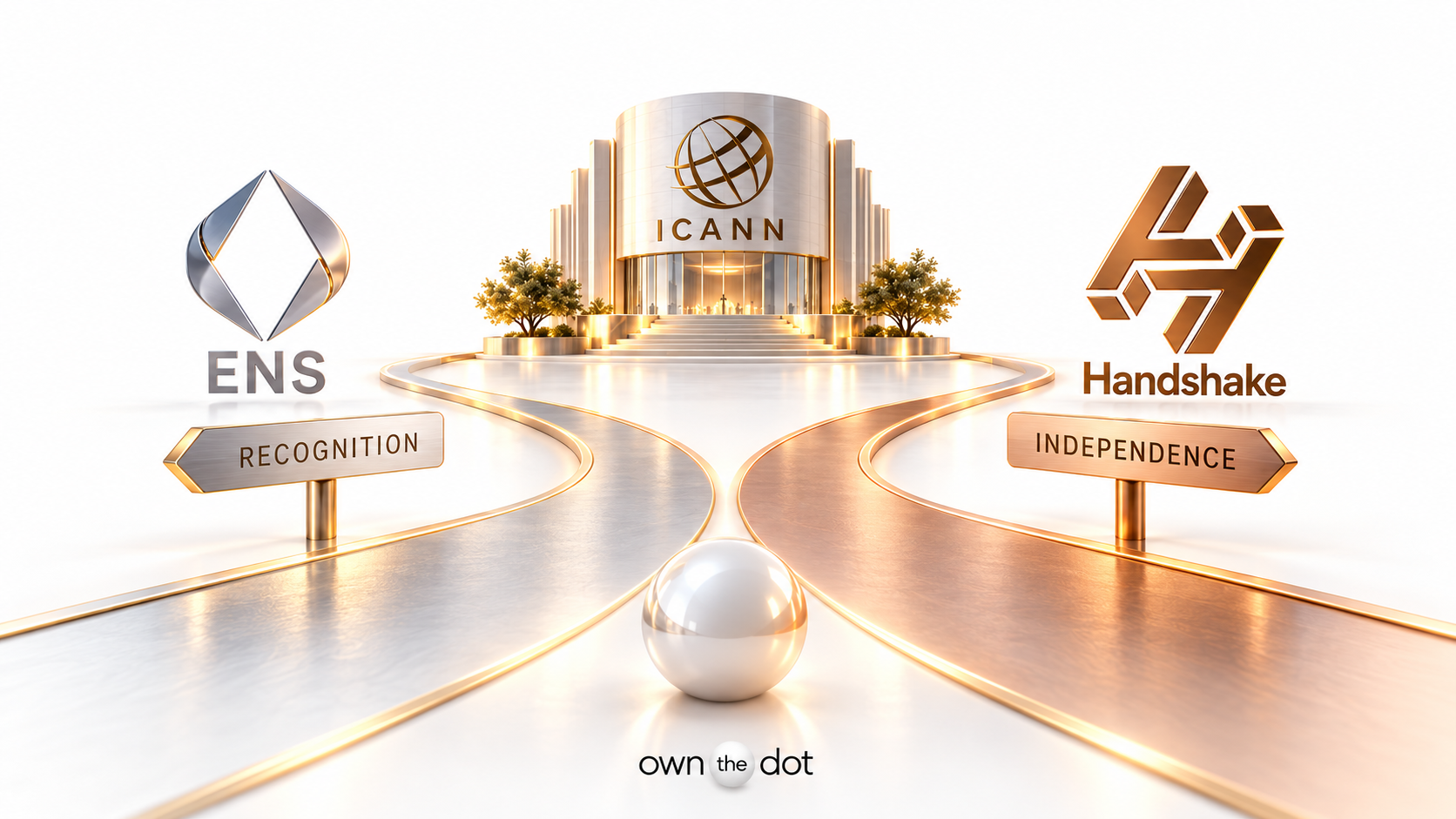
Why ENS Chose ICANN And Where That Leaves Handshake
Why is Ethereum Name Service seeking recognition from ICANN while Handshake remains independent? A plain English look at two approaches to internet naming.
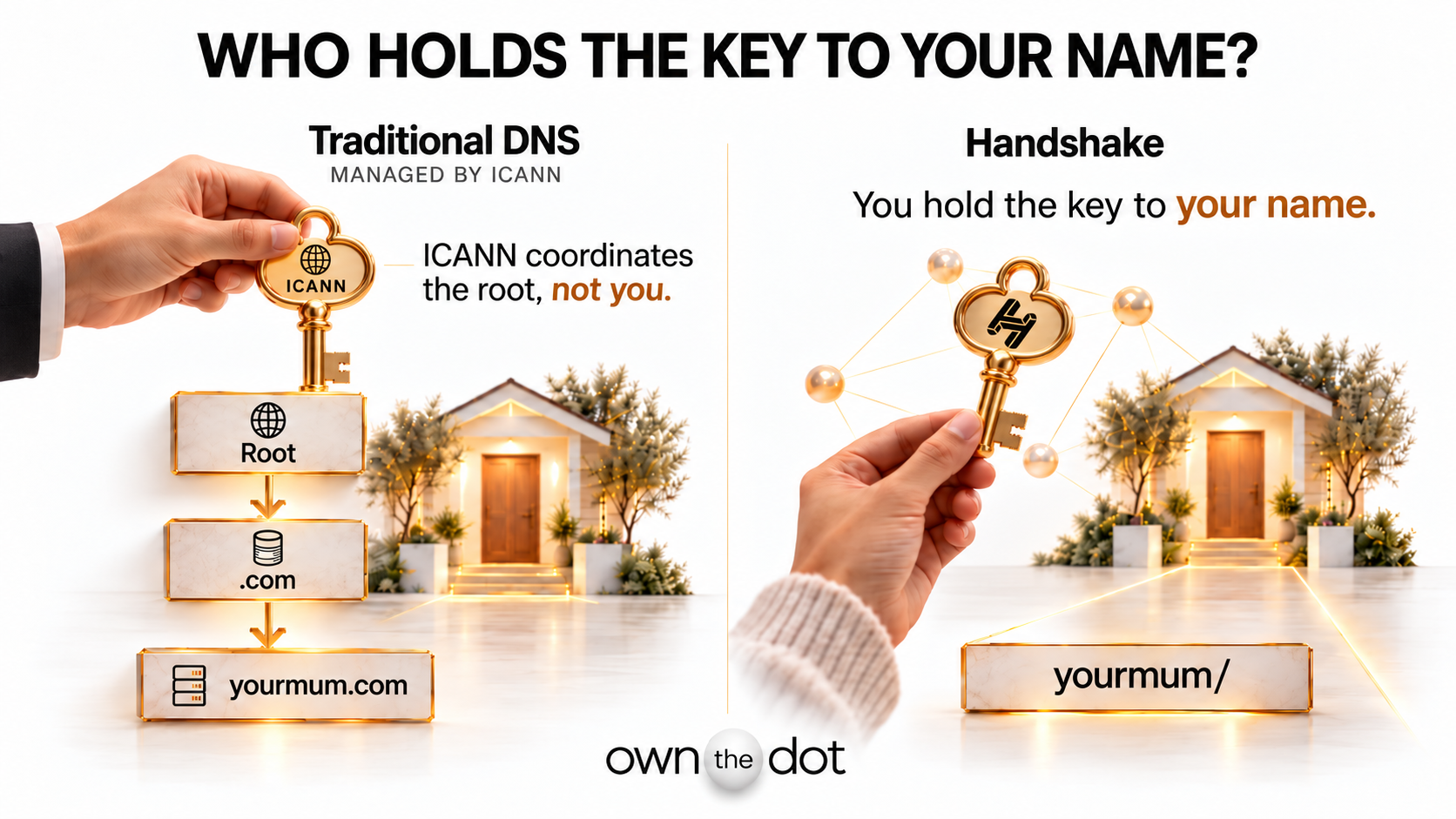
Who Holds the Key to Your Internet Name?
A visit to Mum's website reveals two different ways of establishing trust online: traditional DNS and Handshake. Who controls the naming system behind your destination?

It’s Your Move, Handshake
Following ICANN’s latest Reveal Day, Scott Florcsk examines what overlapping domain extensions mean for Handshake and the choices facing its community.
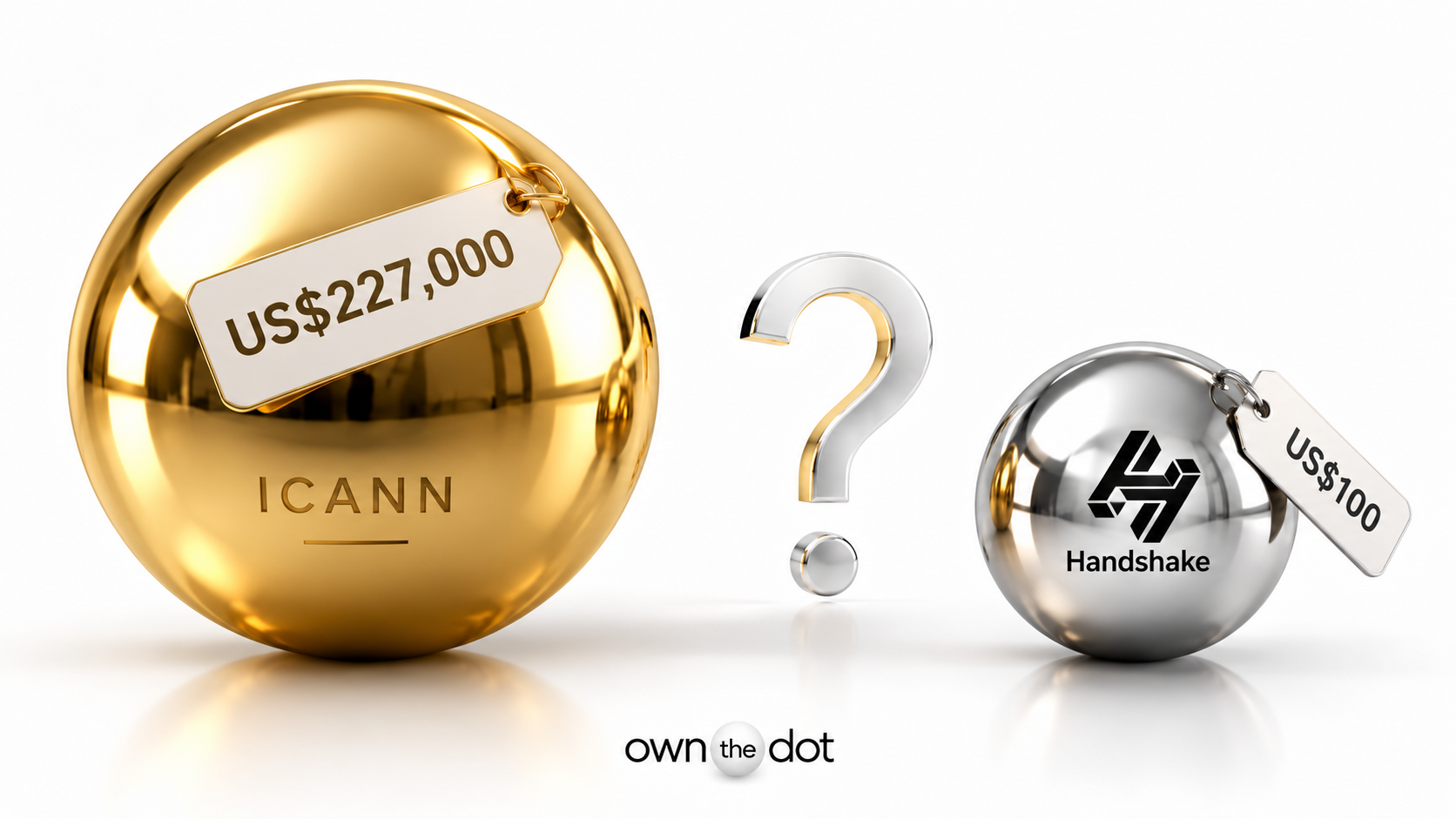
Is US$227,000 Really Worth It for a Domain Extension?
US$227,000 just to apply for a new domain extension, with ongoing costs to follow. Would an established .com make more sense, and could Handshake offer another opportunity?
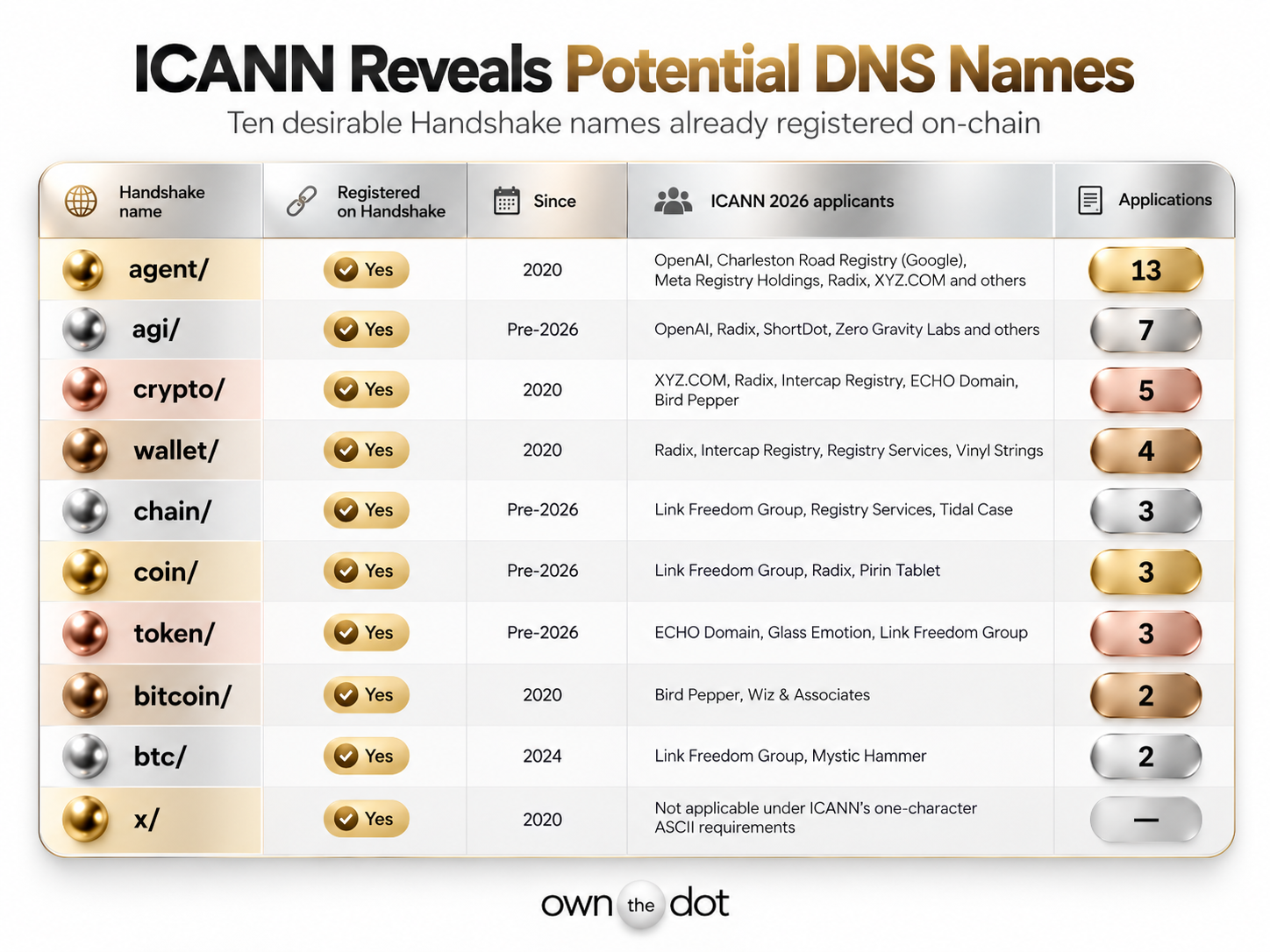
ICANN Reveals Potential DNS Names
ICANN has revealed the strings applied for in its 2026 new gTLD round. Here are ten desirable names that already exist on the Handshake blockchain.
Branding Where the Crowd Isn’t
Could an unfamiliar naming system become a marketing advantage? Coca-Cola’s EmotiCoke campaign showed how an unusual web address can become part of the advertising itself.
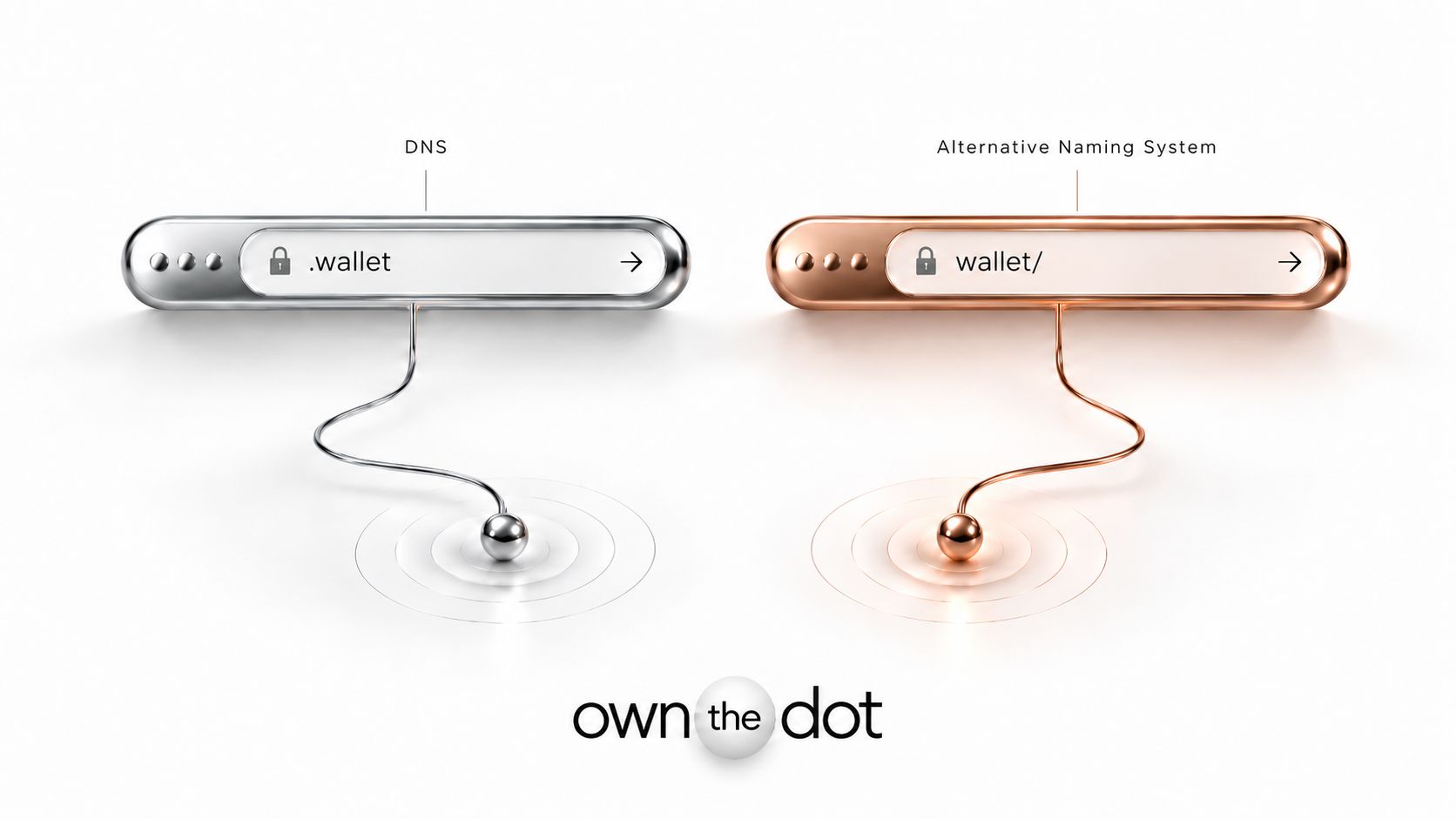
Why Did ICANN Create a Study Group for Alternative Naming Systems?
Before ICANN reveals its next round of new domain extensions, it is worth looking at why it created a technical study group to examine the same names being used across the DNS and alternative naming systems.
Who Gets to Name It?
When governments, registries and companies shape the language around names, who controls the name and the rules behind it.
AI Agents Need Names Too
AI agents are beginning to get names and identities of their own. As they start acting on our behalf, the question is: what will we name them, and who owns their identity?
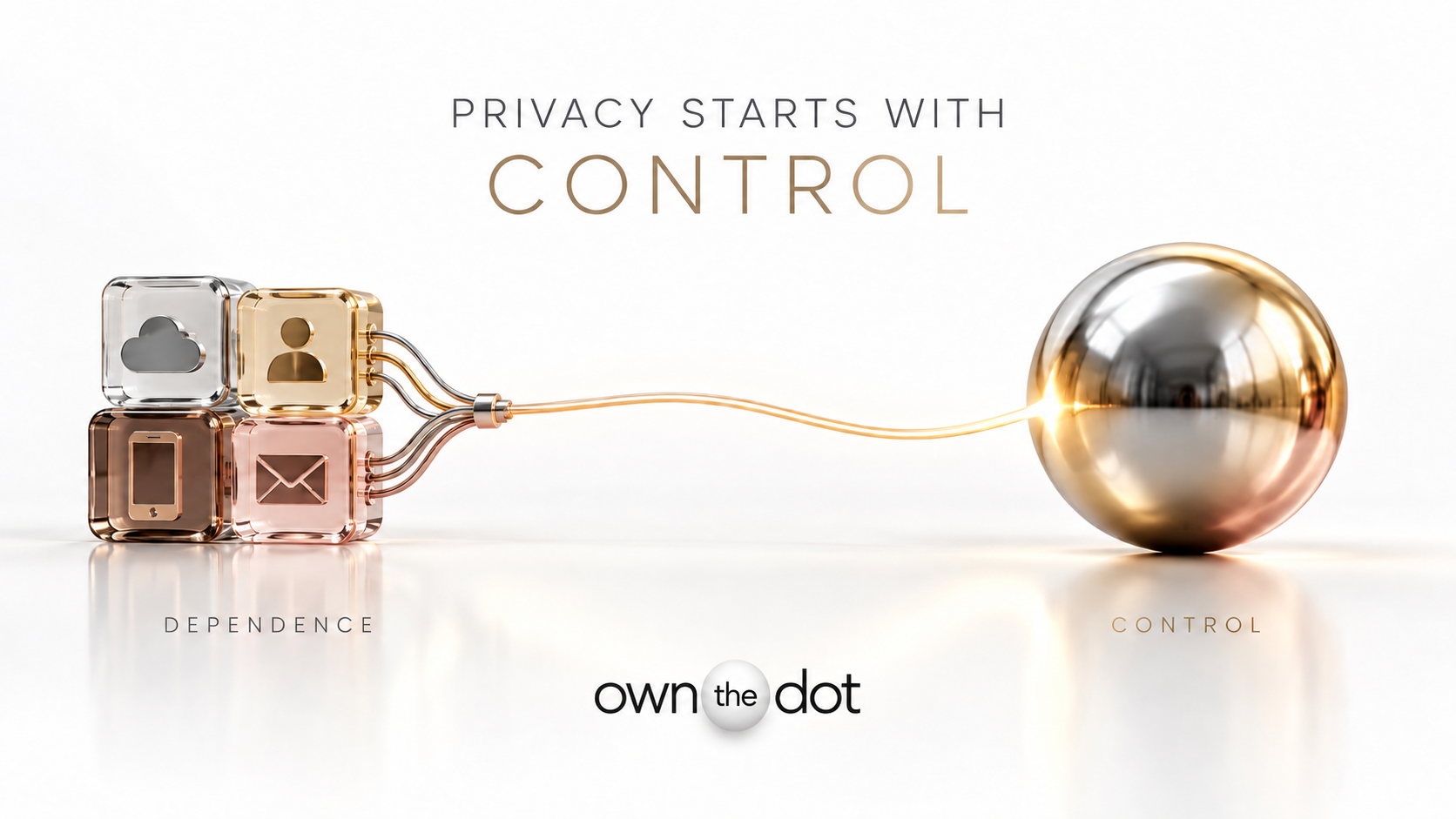
Digital Privacy Starts With Control
Digital privacy starts with knowing who controls your information, accounts and online identity.
Namebase: From Custody to Ownership
As the old custodial Namebase reaches the end of its chapter, a new non custodial model puts control and responsibility back in the hands of the owner.
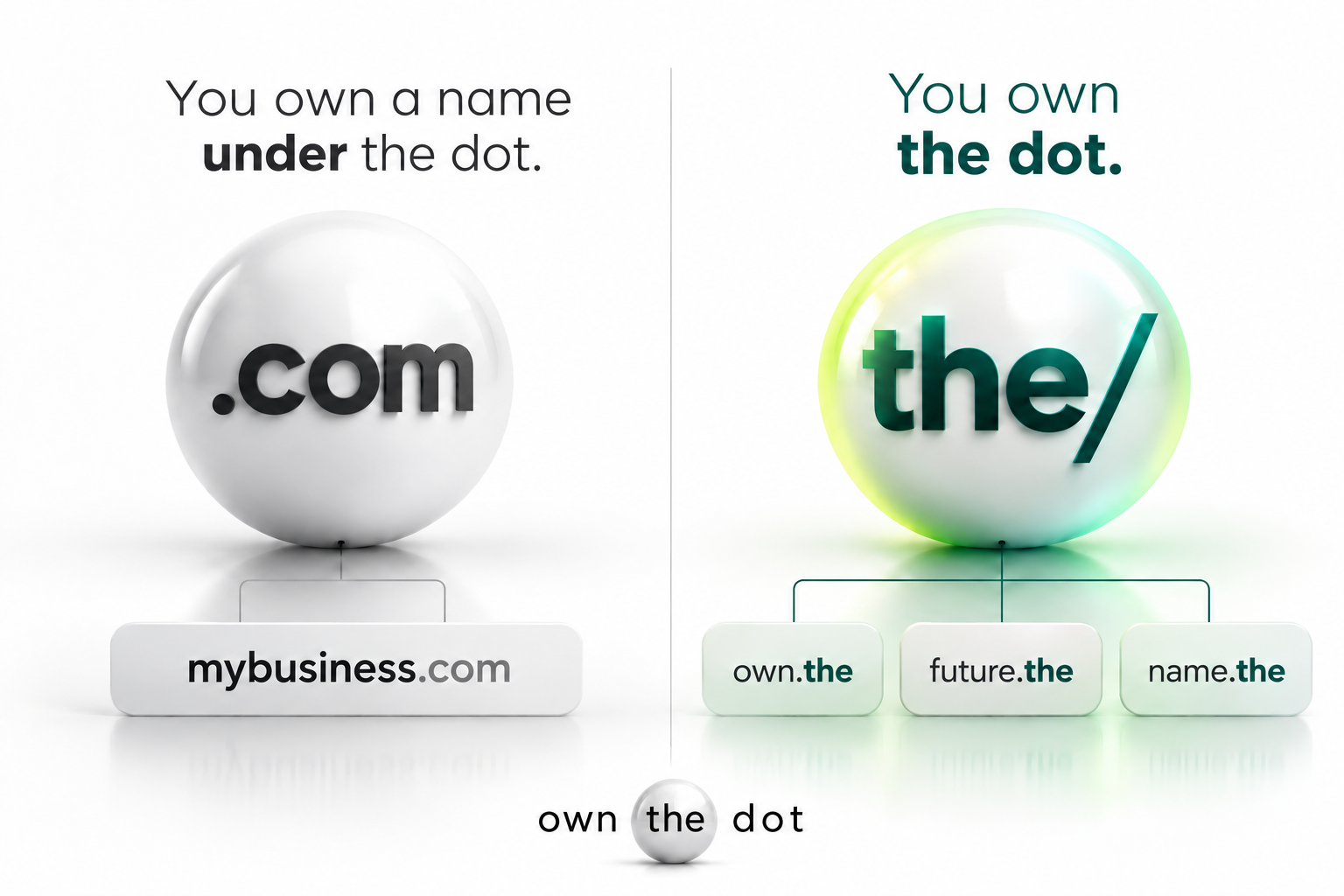
Do You Own the Domain ~ or Do You Own the Dot?
Most domain owners own a name under someone else’s extension. Handshake introduces a different idea: owning the top level name itself.
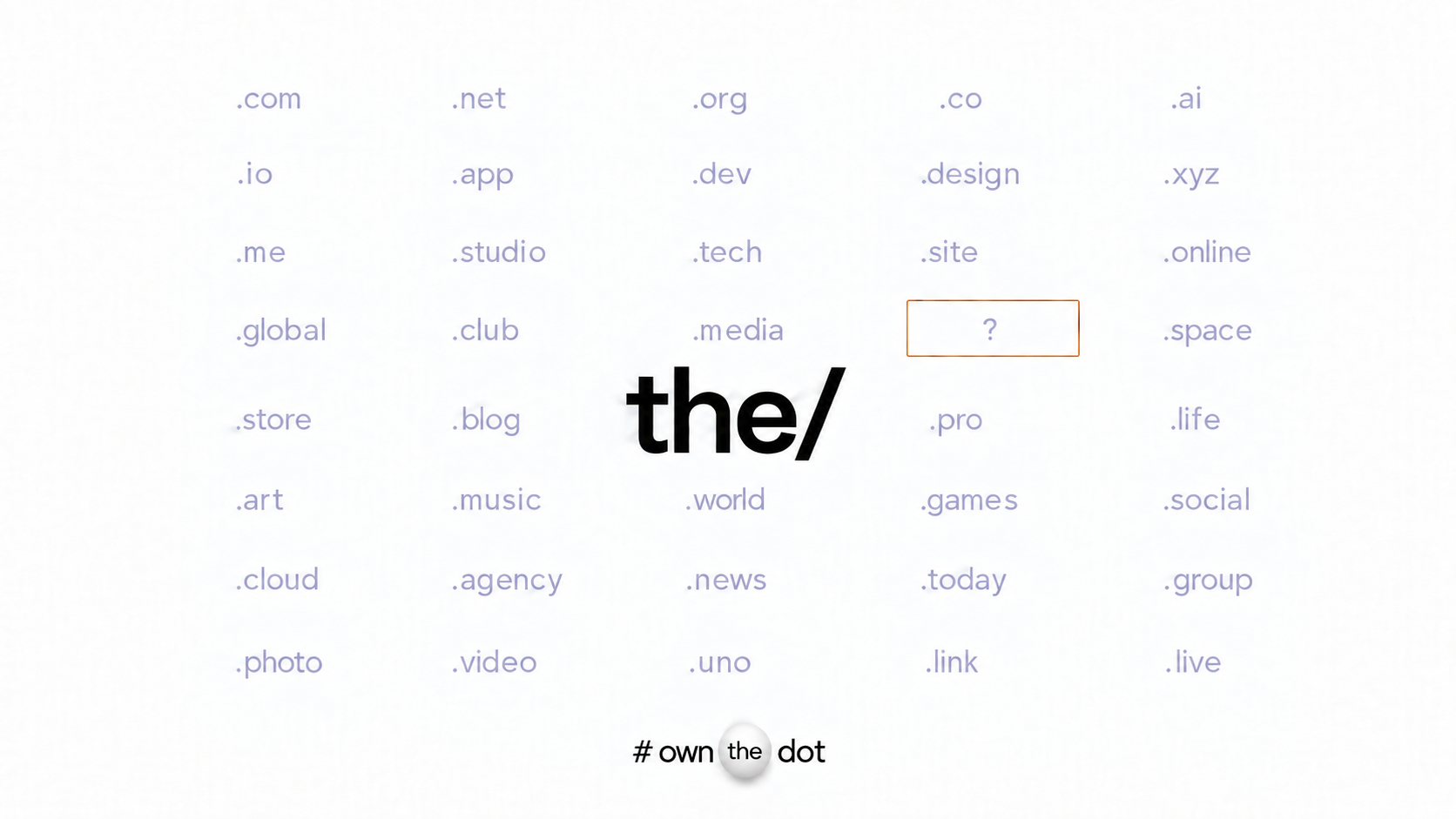
Before .the Becomes a Dot?
Before ICANN reveals the next wave of new gTLD applications, the name the/ already exists on Handshake and it is already being used.
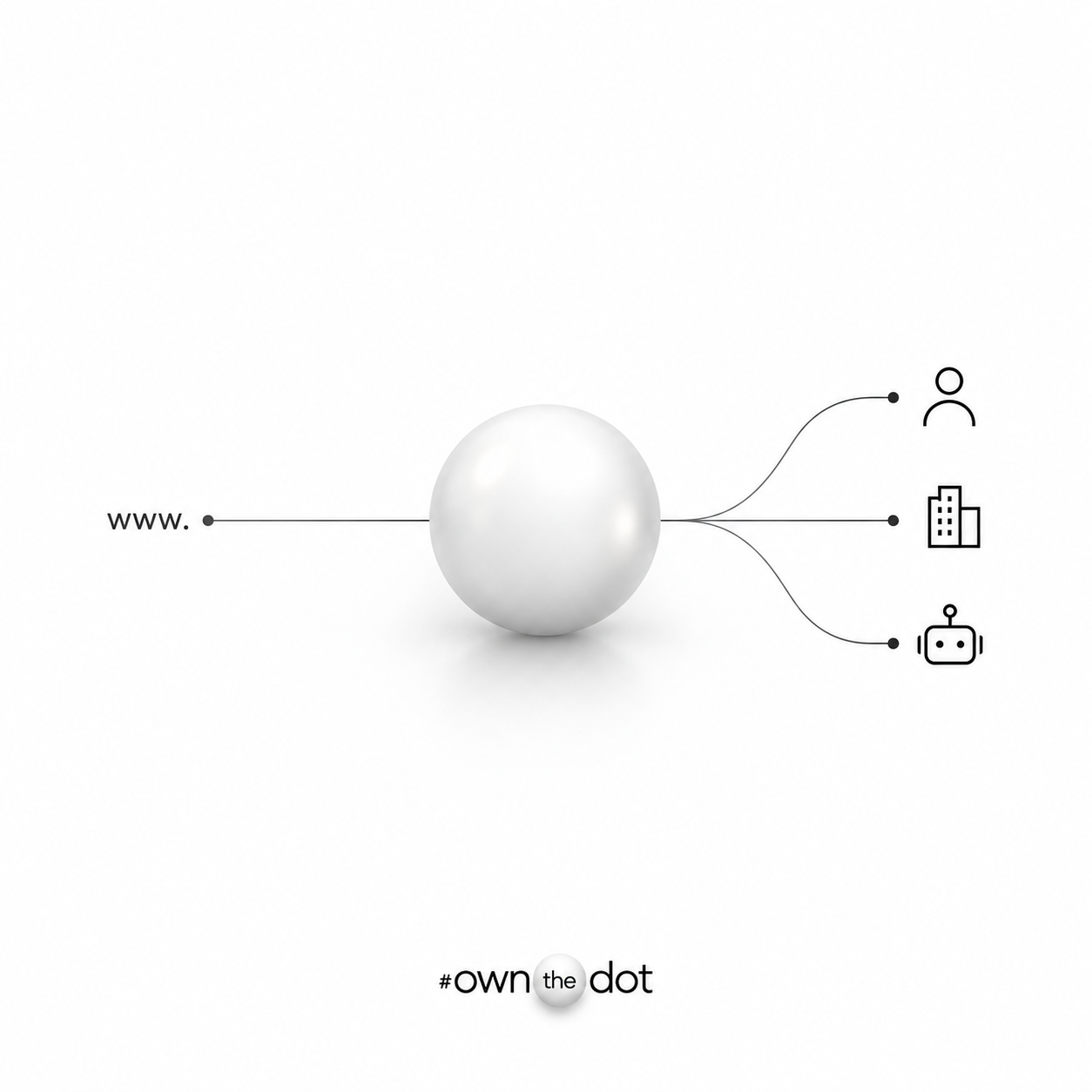
What Will a Domain Name Be in Ten Years?
Domain names may be moving beyond web addresses and toward something much more important: identity. What happens when names become the anchor for people, businesses and AI agents?

The People Behind Handshake
A look at the developers, builders, miners and community members who keep the open-source Handshake ecosystem moving.
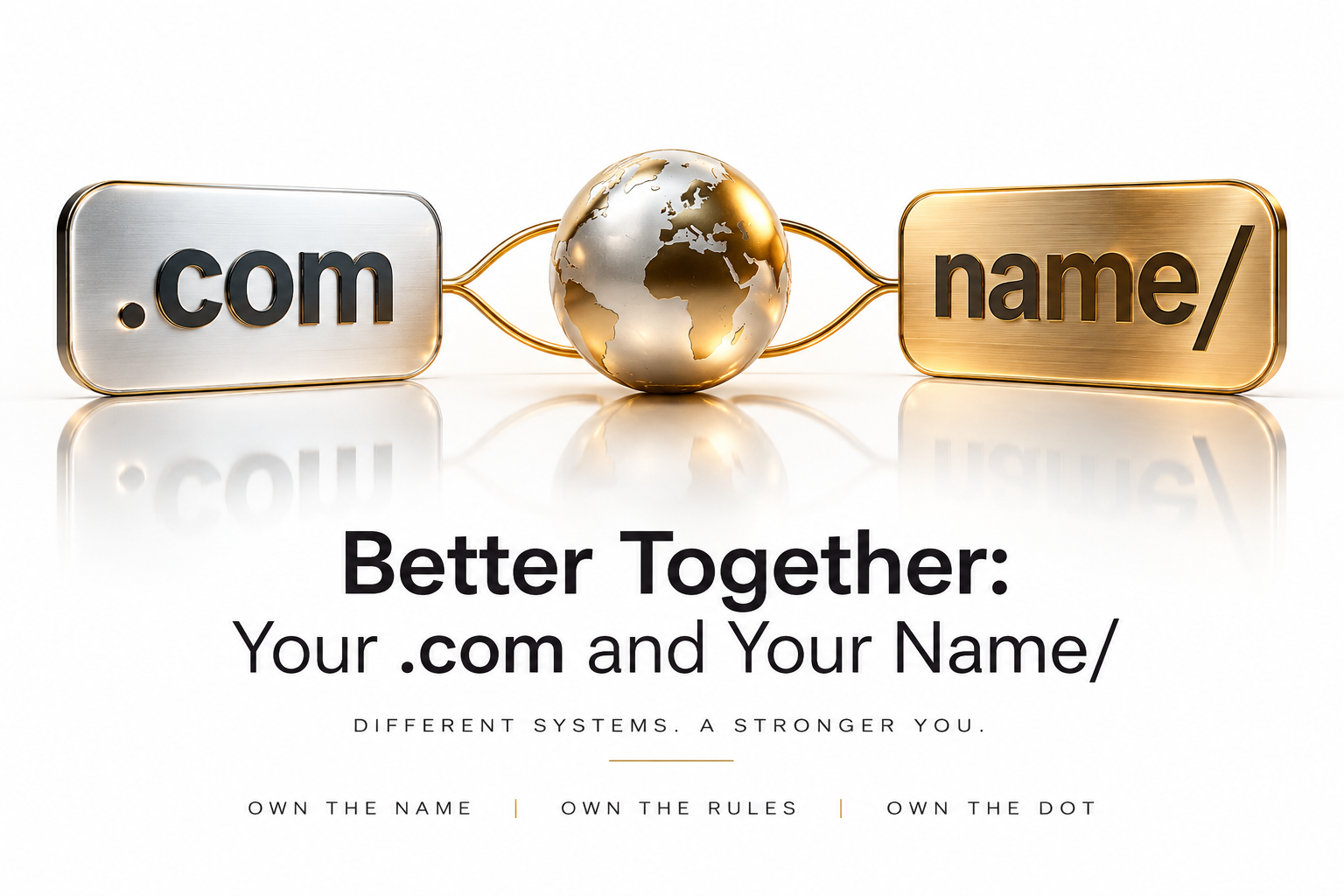
Better Together: Your .com and Your Handshake Name
A .com and a Handshake name do not have to compete. Used together, they can strengthen how people find, recognise and understand your digital identity.

When the Rules Change on Your Name
The current debate around changes to .com.au raises a bigger question: what happens when the rules governing a name you rely upon can be changed by someone else?

The Future of Naming
Names have always been part of who we are. As more of life moves online and AI agents begin interacting on our behalf the way names are created, used and owned becomes increasingly important.

What Is the Handshake Protocol?
A simple introduction to the Handshake protocol and its different approach to naming on the internet.

What Is $HNS?
$HNS is the native coin of the Handshake network. But its role goes much further than simply being a cryptocurrency.

What Are Handshake Miners?
Handshake miners contribute computing power to secure the network and can be rewarded with HNS but they don't own your name.

If I Own It, Why Do I Have to Renew It?
If you truly own a Handshake name, why does it still need to be renewed? Understanding the heartbeat transaction.

How Does a Handshake Auction Work?
A simple explanation of how Handshake name auctions work, from opening an auction to bidding, revealing and registering a name.
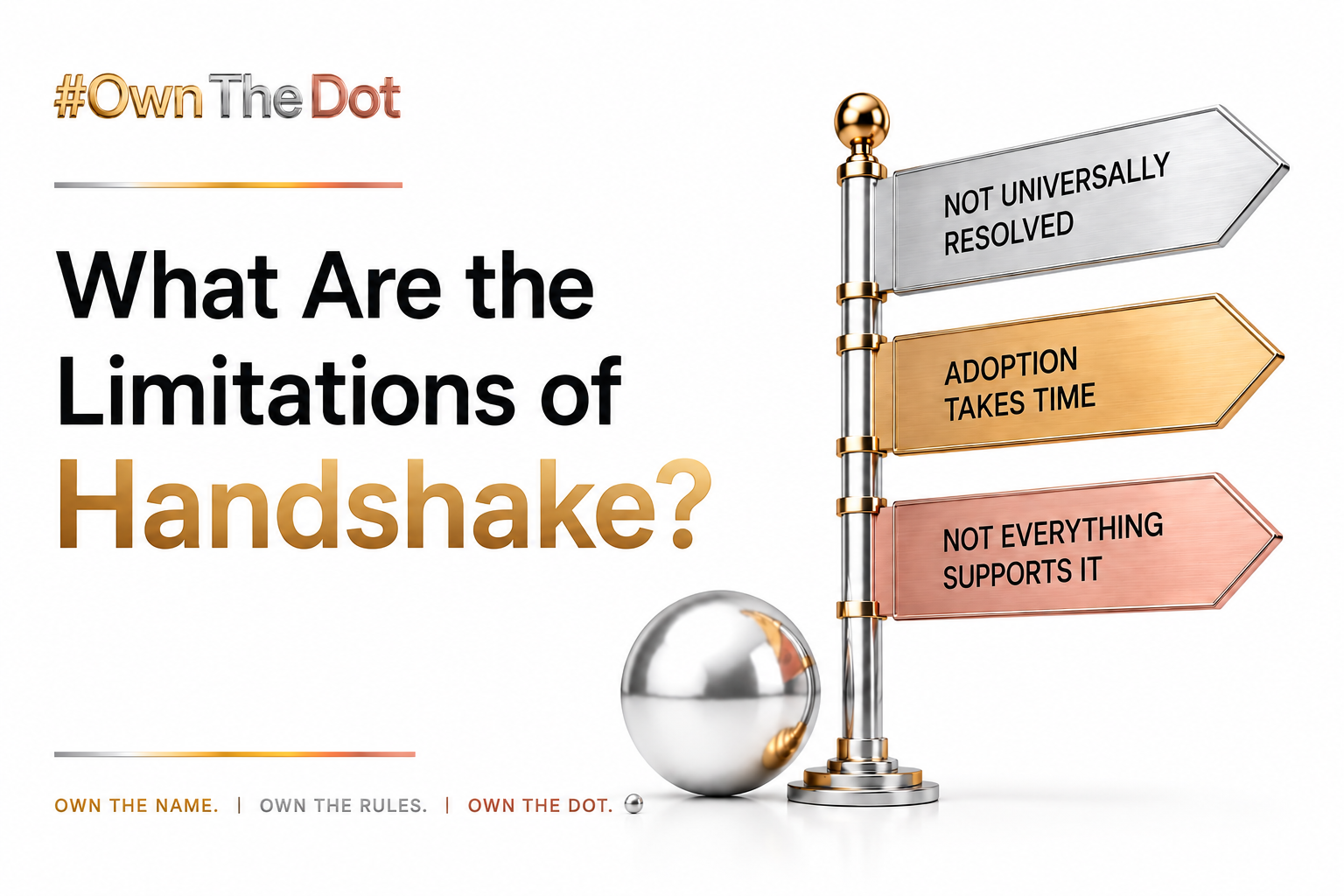
What Are the Limitations of Handshake?
A balanced look at some of the practical limitations of using Handshake today.
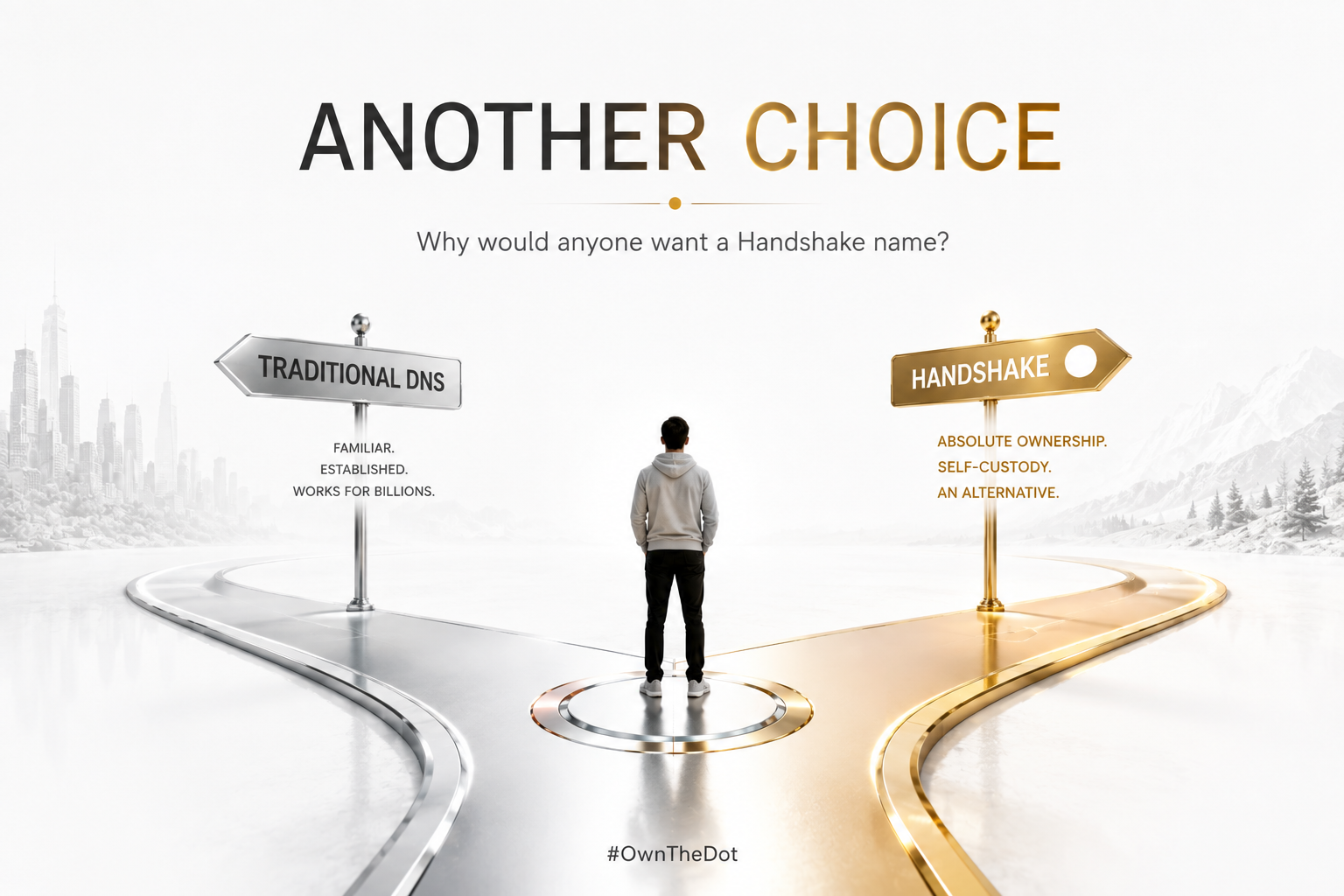
Why Would Anyone Want a Handshake Name?
Why ownership, control and having another choice in internet naming may matter.

What Happens After I Own a Handshake Name?
Once you own a Handshake name, what can you actually do with it? A simple look at control, use and responsibility.
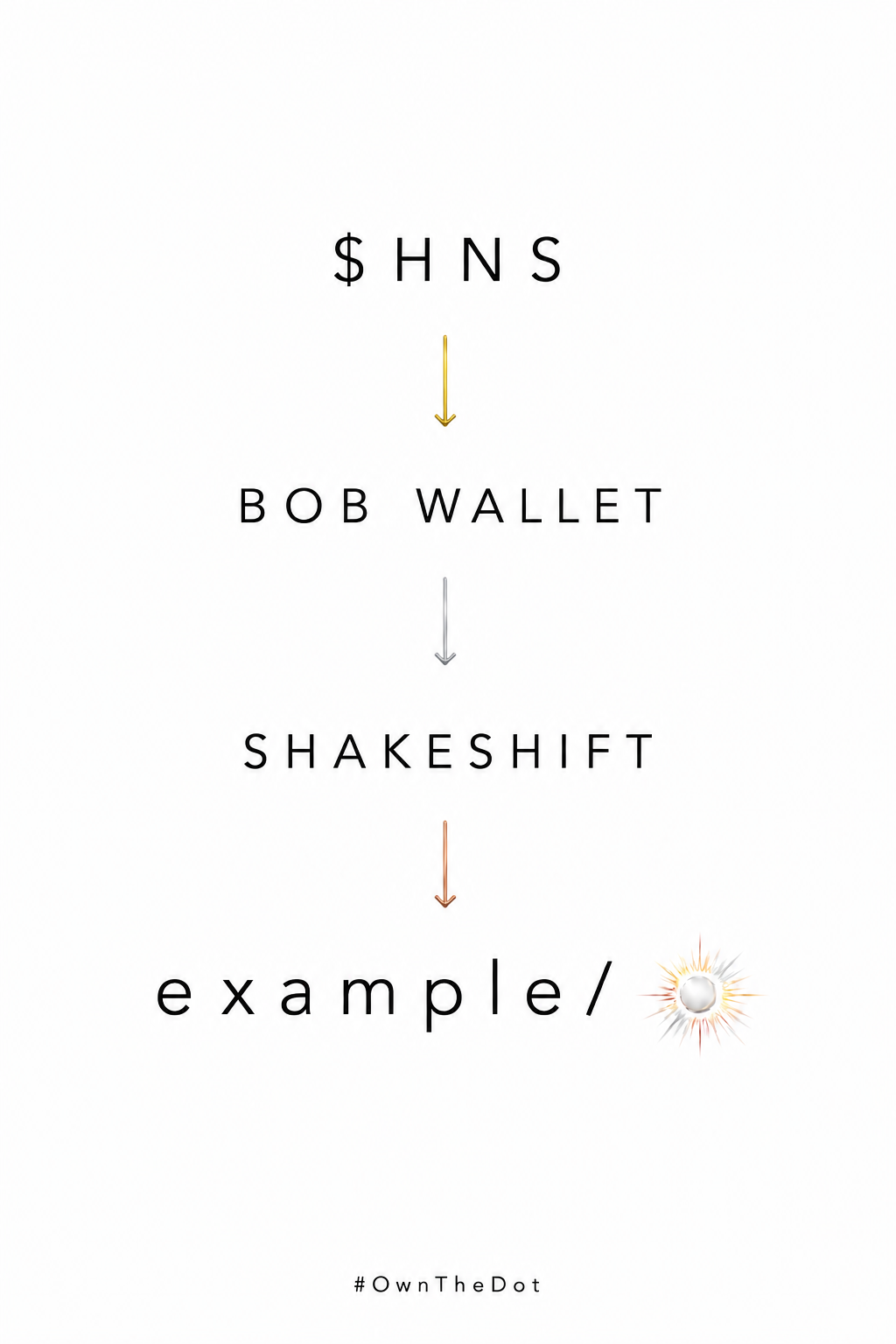
How Do I Get a Handshake Name?
A simple introduction to acquiring a Handshake name, from HNS and Bob Wallet to exploring name auctions.
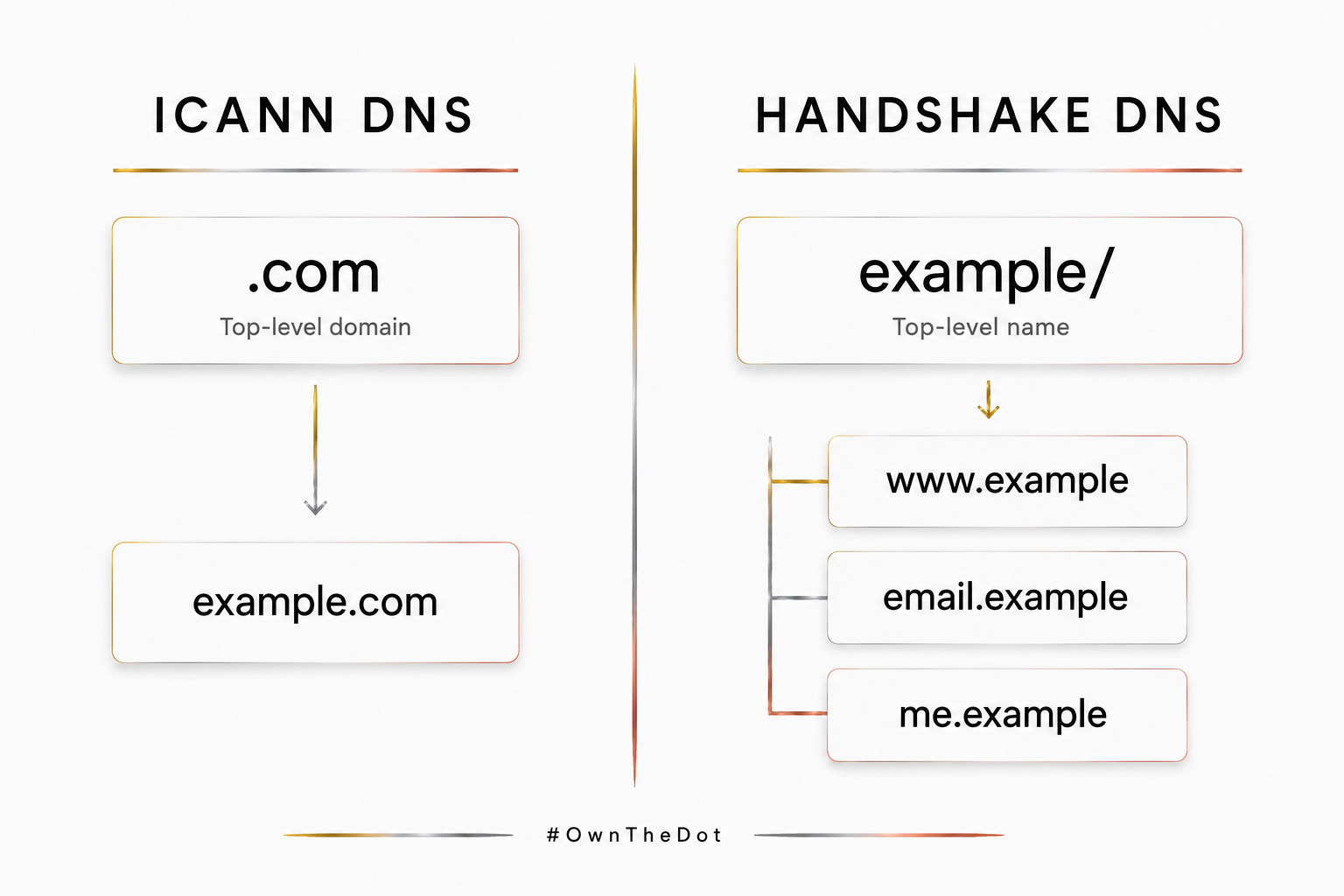
What Is a Handshake Name?
A simple look at what makes a Handshake name different from a traditional domain name.
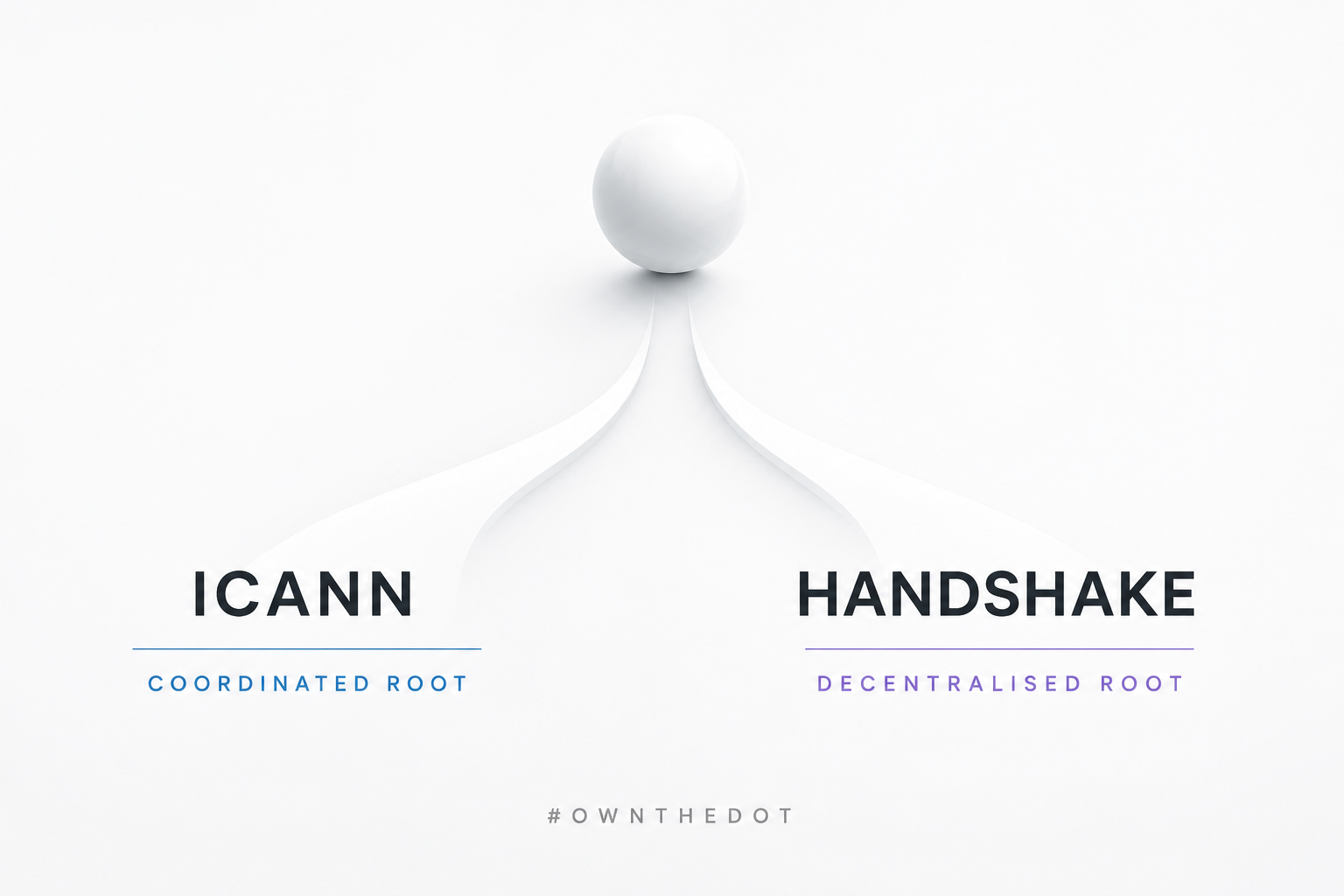
ICANN and Handshake: Understanding the Difference
A simple look at how ICANN and Handshake approach internet naming, why they exist, and what makes them different.
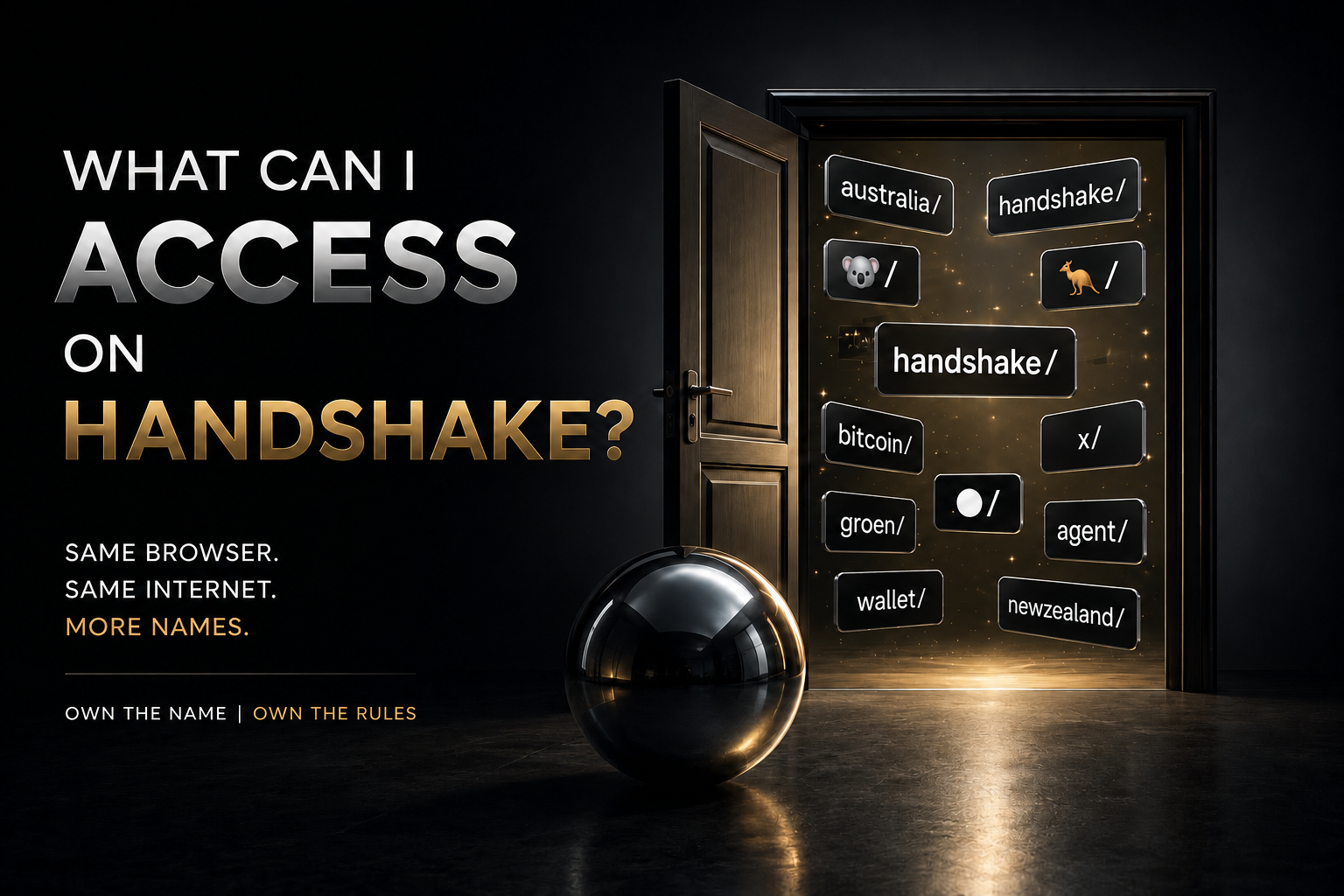
What Can I Access on Handshake?
Explore some of the websites and names available through the Handshake naming system.
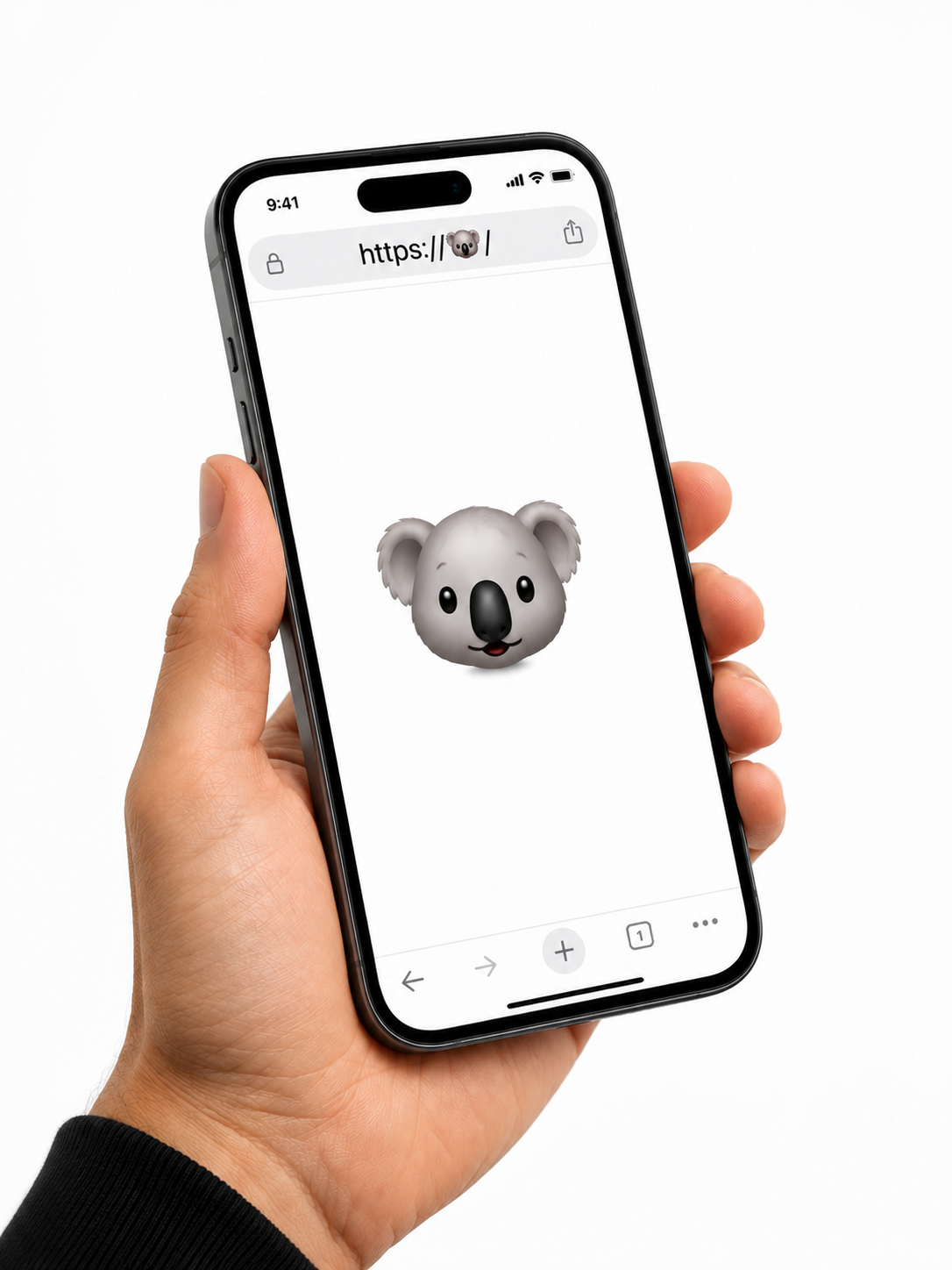
How Do I Experience It?
A simple way to experience Handshake naming for yourself using an iPhone.
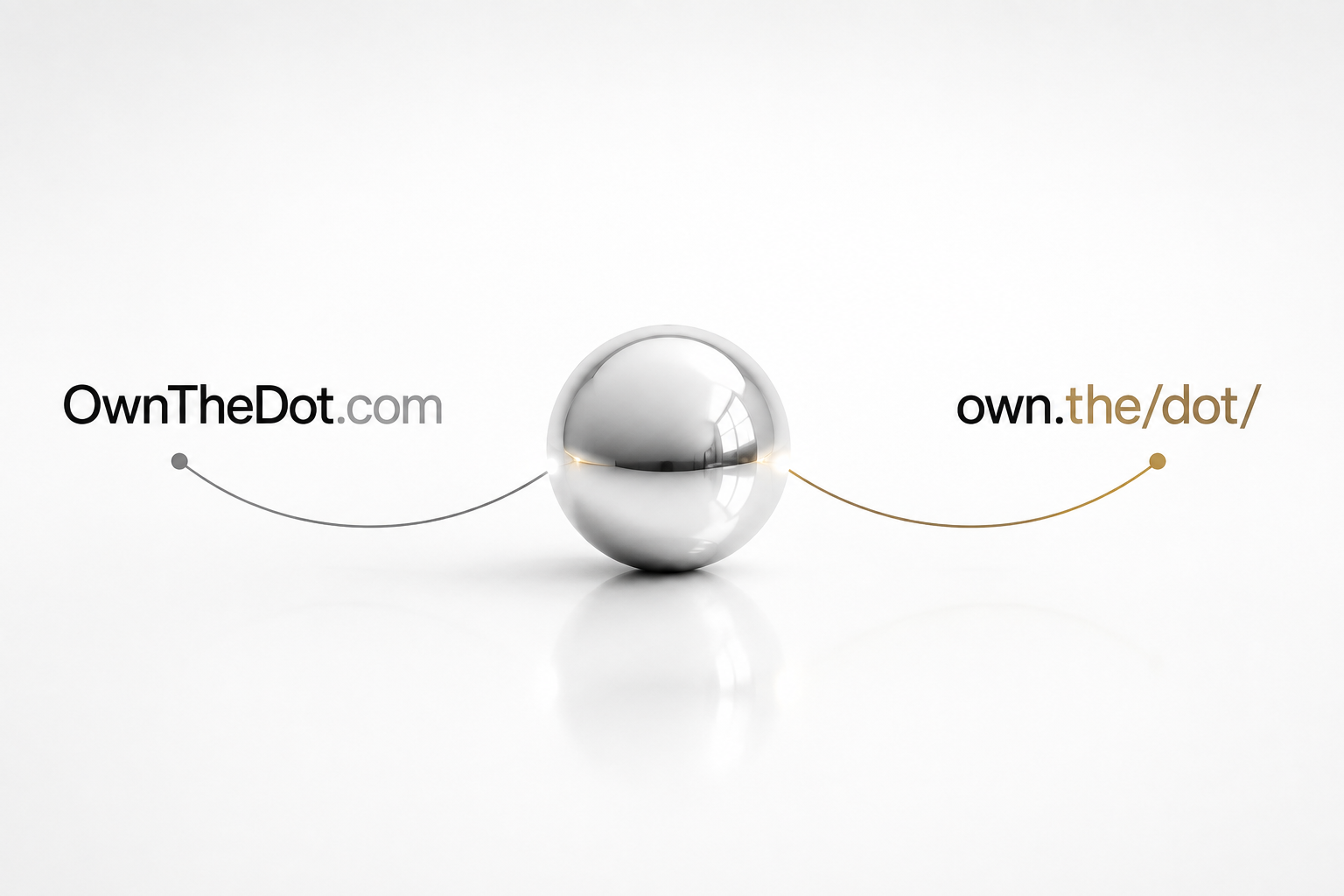
There's More Than One Way Into the Internet
Discovering another way to navigate the internet through Handshake.

What Does It Mean To Own The Dot?
Exploring what it really means to own your name online and how Handshake introduces a different model of digital ownership.
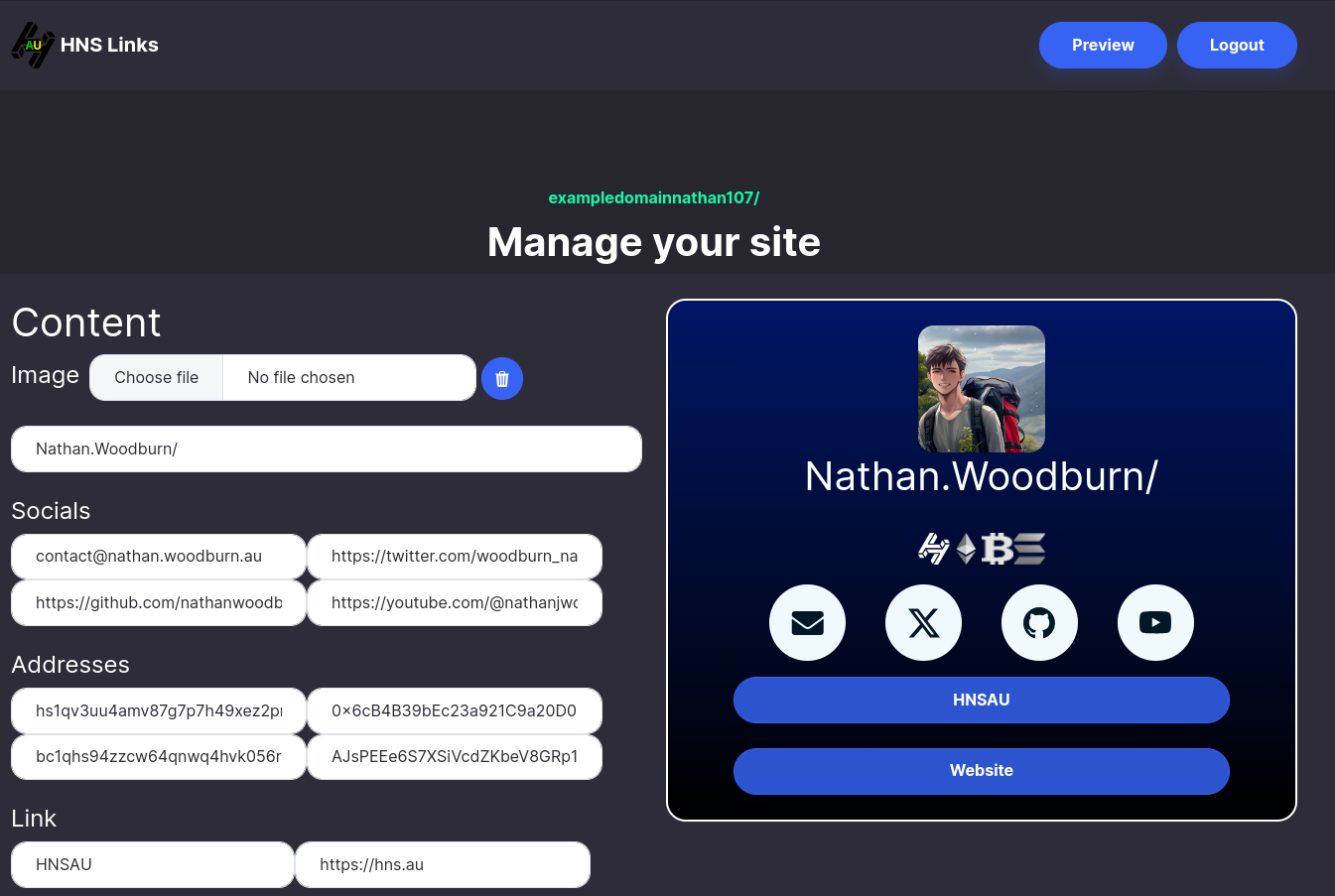
Getting Started with Handshake Domains in 2026
A practical step-by-step guide to resolving, acquiring, and setting up your first Handshake name and website.
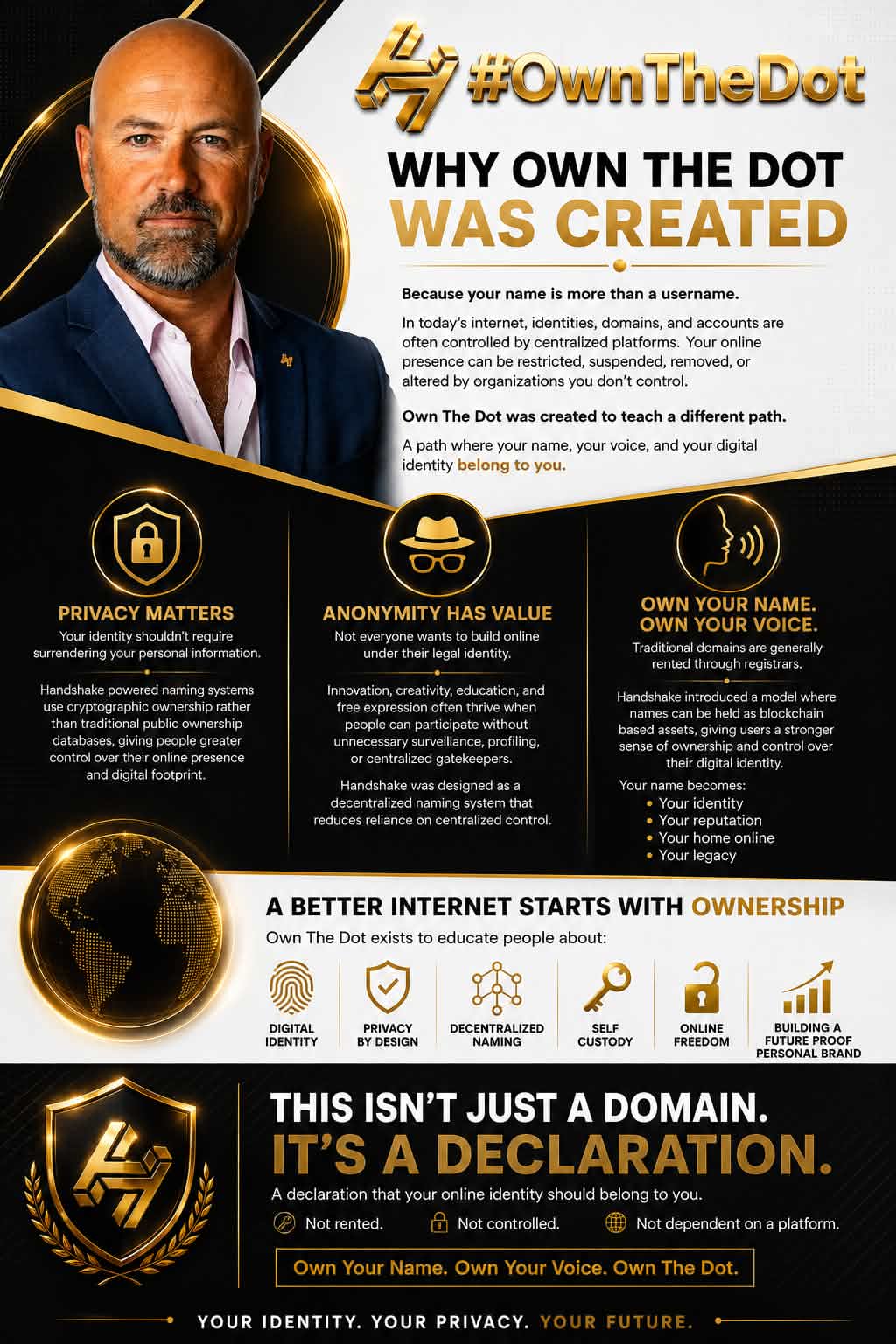
Why Own The Dot? Beyond Traditional Domain Leasing
For decades, the dot in domain names has been controlled by centralized gatekeepers. Discover why claiming your own top-level domain is digital property.
No articles matched your search.