The Handshake Protocol: A Decentralized Root Zone
Think of Handshake as a digital handshake between you and the internet.
Today, most internet domain names are controlled by central authorities like ICANN, Verisign, and registry operators. When you register a domain name like example.com, you don't actually own it—you rent it from a registrar, agree to their terms of service, and risk losing access if policies change or prices spike.
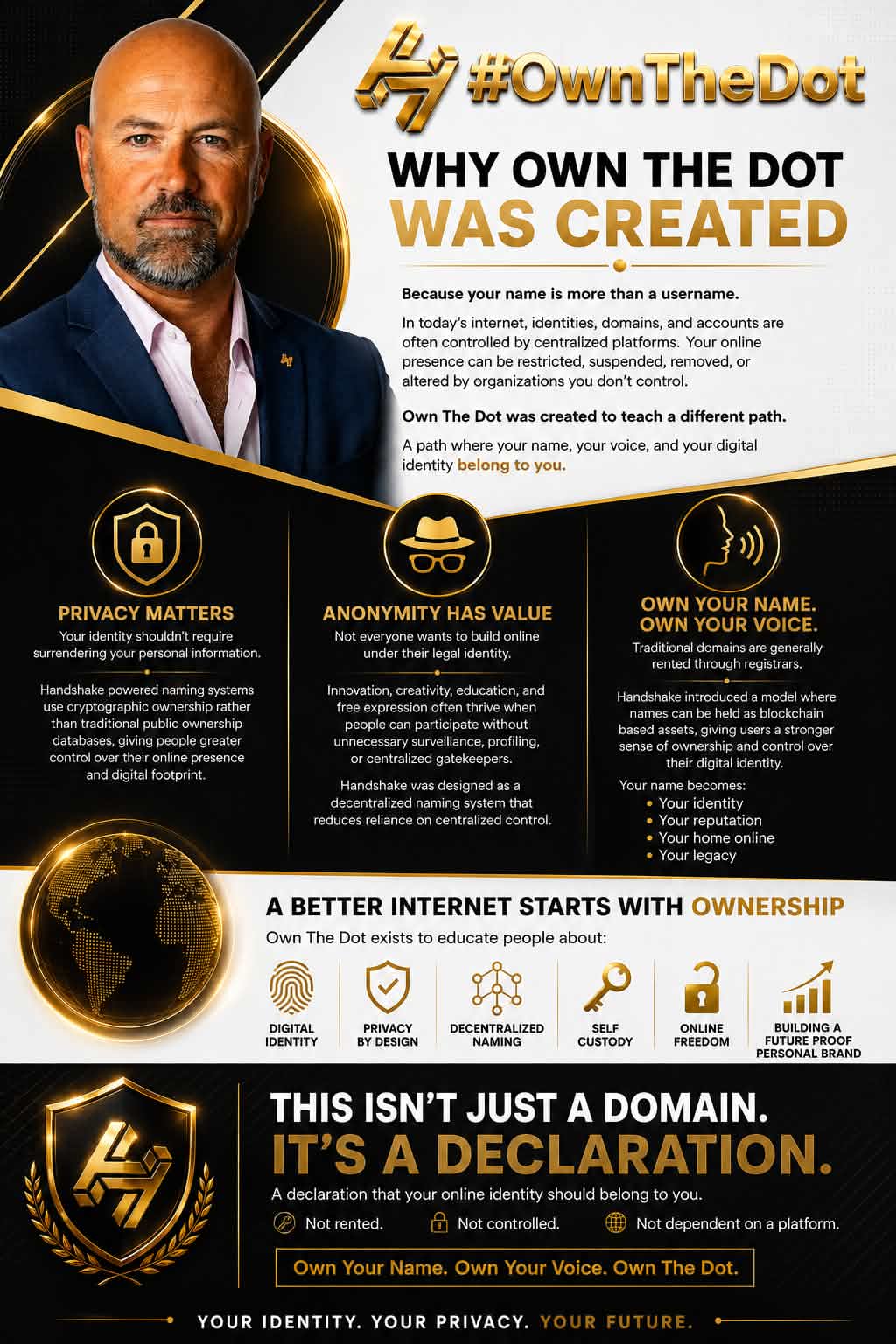
Handshake removes the middleman. It lets individuals and communities own top-level domain names directly, without relying on a centralized company or government authority.
How It Works
- You Claim a Unique Name: Top-level domains (TLDs) are auctioned and registered directly on the Handshake blockchain.
- Network Verification: The decentralized network of Handshake nodes cryptographically verifies ownership using Proof-of-Work.
- Public Ledger: Ownership records and cryptographic public keys are permanently recorded on the blockchain.
- Decentralized DNS Root: Handshake replaces the legacy root zone file managed by ICANN with a trustless, decentralized naming system.
[ Legacy Web ]   -> ICANN -> Registry -> Registrar -> Registrant (Renter)
[ Handshake ]    -> Decentralized Blockchain -> Name Owner (True Owner)
Key Advantages of Handshake
- True Ownership: You own the root domain outright—it is personal digital property, not a temporary lease.
- Censorship Resistance: No central authority can seize your domain, change your nameservers, or revoke your access.
- Subdomain Authority: Once you own a TLD (like
mybrand/), you can issue unlimited subdomains (app.mybrand/,shop.mybrand/) without paying registry fees. - DANE & HTTPS Security: Handshake allows domain owners to publish cryptographic TLSA records directly to the blockchain, eliminating the need for vulnerable Certificate Authorities (CAs).
The Road Ahead
Handshake is built for a resilient, user-owned internet. When you hold your private keys, your digital identity belongs to you forever.
Own the name. Own the rules. #OwnTheDot